
Damp, Mould and Disrepair: How Landlords Should Handle Complaints Properly
Sets out a legally safe, evidence-based approach to handling damp and mould reports — inspections, communications, contractors, and documentation. Explains why ignoring or mishandling complaints causes far more risk than the repair itself.
PROPERTY MANAGEMENT & DISPUTE PREVENTION
Arman Khosravi - Solicitor
2/1/20261 min read
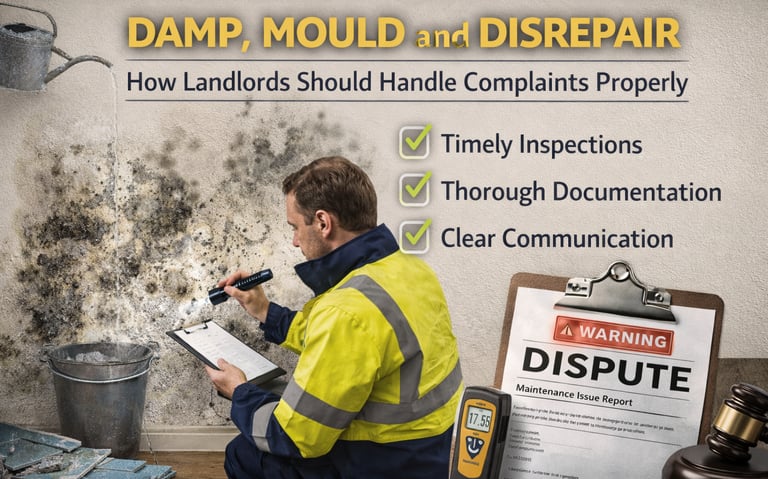
Damp and mould complaints have become a major source of landlord exposure, not just because of the underlying issues, but because of how they are handled. The legal risk often arises less from the condition itself and more from delay, poor communication, or inadequate investigation.
Landlords are expected to respond promptly, investigate properly, and take reasonable steps to resolve issues. Simply attributing damp to “lifestyle” without evidence, or delaying inspections, can quickly escalate matters into formal complaints or enforcement action.
At Hermens, we advise landlords to treat damp and mould reports as evidence-led issues. That means early inspection, clear documentation, and a measured response based on findings rather than assumptions. Communications with tenants matter enormously. The tone, timing and content of responses can either defuse or inflame the situation.
For managed properties, we coordinate inspections, contractors and follow-up, ensuring that the process is documented and defensible. Where tenant behaviour is a contributing factor, this is addressed carefully and professionally. Where remedial works are required, they are scoped and managed transparently.
Because of our legal background, we are acutely aware of how these cases are assessed by local authorities and tribunals. Our approach is designed not just to resolve the issue, but to protect landlords if the handling of the matter is later scrutinised.
Damp and mould issues are rarely helped by delay or defensiveness. A structured, professional response protects both the property and the landlord.
Lettings, Sales & Property Management.
Email & Telephone:
Contact us now:
Address: 87 Lancaster Road, London, W11 1QQ
Registered Office: Watersmead, Addlestone Road, Addlestone, KT152RX
© 2026 Hermens Ltd Co reg: 16063390 | Terms & Conditions | Privacy Policy | Complaints Procedure
Disclaimer: Hermens Property is not a law firm and does not provide legal services or advice. Legal work is carried out by independent regulated law firms.